Why Is This Here?
Brianne West built a global beauty business by removing something most people had never thought to question: water. But the shampoo bar is not the most interesting part of her story. The interesting part is how she looks at products, businesses and the assumptions everyone else has learned to accept as normal.
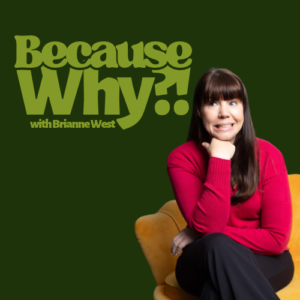
Brianne West founded Ethique in her Christchurch kitchen in 2012, while she was still studying science at university. Ethique made solid shampoo, conditioner and other beauty bars that need no plastic bottle. The company grew into a brand sold by thousands of retailers in more than 20 markets. West sold a majority stake in 2020 and stepped down as CEO in 2023. She has since applied the same logic to another industry with Incrediballs, a plastic-free drinks brand.
The product sounds simple, and West herself is the first to call it obvious. But underneath it is a way of thinking that can be applied almost anywhere.
The child who wanted to save the world
When Brianne West was a child, she wanted to save the world.
She is not sure what that meant at the time, but animals, nature and science fascinated her from an early age. She wanted to understand why things worked the way they did, and she wanted to make things better. The entrepreneurial instinct appeared just as early. At around seven, she covered her babysitter’s house in her own paintings, put up a sign by the road and invited people into her ”art gallery”. A year later, she started a pet detective business.
The paintings were not particularly good, she admits. That was not the point. What fascinated her was creating something of her own.
The ingredients of her later career were already in place: curiosity, independence, a strong environmental instinct and a tendency to question how things are normally done. West says she has not changed much since then.
”I’ve always been really interested in understanding why something is the way it is,” she says. ”I like understanding the deeper reasons for things, and I think that’s an entrepreneurial trait.”
A job without a safety net
West studied biology, and her path through university was far from straightforward. Alongside her studies, she taught herself cosmetic chemistry and started her first company, a small natural cosmetics business.
It was not driven by any grand mission. She simply didn’t want the part-time job most of her fellow students had. She imagined that running her own company would give her more money and more free time. ”Which is a stupid thing to think,” she says. ”But here we are.”
The business grew well enough that she studied part-time for years. About a year and a half later, she started a second company, which sold shelf-stable spoonable fudge. The idea came after she ran out of time before a dinner party and could not find a ready-made dessert in the supermarket that did not taste of plastic. She went home that evening and started experimenting with sugar, chocolate and cream.
Both companies were successful enough to be sold. What surprised West was how quickly she lost interest in them. ”Neither of them had any big mission. Neither of them was doing anything good, and I think that’s why I got bored of them both very quickly.”
She loved science, but did not want to spend her life in a laboratory. She loved running a business, but business without purpose was not enough. That brought her back to the idea she had held since childhood: perhaps business itself could be used to make the world better.
West is also wary of the glamour attached to the word ”founder”. ”It’s glorified as this position of amazing success, but it’s just about doing something the way you want to see it done. It’s massive risk, obviously. It’s a job without a safety net.”
Thinking differently, on purpose
West never studied business. She once considered an MBA, but her business partner at the time talked her out of it. His argument was that what made her successful was that she thought differently, and that conventional business skills were easy to find elsewhere. Formal training might sand that difference away.
It is a theme that keeps returning in this interview series. Almost every innovator we have interviewed describes themselves, in one way or another, as someone who looks at things differently.
”Which would make sense,” West says. ”You’ve got to look at things in a different way.”
No eureka moment
The creation of Ethique is sometimes told as if it began with a single flash of insight: shampoo is mostly water, bathrooms already have water, so why ship water around the world in plastic bottles?
West remembers it differently. ”There isn’t any eureka moment. I don’t think there ever really is. It’s usually a culmination of different thoughts, and then one day you think, I’m going to do that.”
The idea grew out of her knowledge of cosmetics, her concern for the environment, her frustration with how mainstream business is run and her wish to build something she would actually care about. The beauty industry seemed an obvious place to start. She knew it well, and she disliked much of it, especially its dependence on plastic and its endless stream of new colours, fragrances and textures.
Once she had decided to make solid shampoo and conditioner bars, she started experimenting at home. Her method differed from existing shampoo bars, and the process was messy. Over roughly six months, she set a considerable number of microwaves on fire.
”That may not sound very long, but it felt like a very long time, because I am a let’s-get-it, let’s-go-and-try-it-now person.”
She sold the first bars as cheaply as possible on a local message board, mainly to collect feedback on the idea and the product. It snowballed from there.
West laughs about not always being the most methodical scientist. She might write down an excellent formulation on a loose piece of paper and then lose it. She probably had more breakthroughs than she remembers. But that is not how she thinks innovation usually works.
”You have the odd moment where you have a breakthrough, but most of the time it’s just doggedly carrying on and testing little tiny tweaks of everything.”
There were also moments when the whole idea felt ridiculous. Every failed batch or lukewarm comment could convince her that everything was wrong. An hour later, she would be back at work.
When asked what kept her going, she struggled at first to explain. There was a strong belief that the business could make a difference. There was also something more personal. West describes herself as stubborn and unreasonable. People told her a company could not be run the way she was proposing, and part of her wanted to prove them wrong.
”Spite, actually. Spite was a motivator,” she says, laughing.
Behind the joke is something serious. Ethique was not only an attempt to redesign a beauty product. It was a test of whether a company could run on a different set of principles.
We have never innovated our way out of a crisis
Most conversations about innovation start with addition: a new feature, a new material, more intelligence, more technology. West’s work tends to move in the other direction, and her reasons are sharper than they first appear.
”We have never innovated our way out of a crisis,” she says.
Her favourite example is synthetic nitrogen fertiliser. It has allowed billions of people to be fed, but it has also polluted fresh water and created dead zones in the oceans. Plastic is another. It was originally welcomed as a sustainable substitute for ivory. It was, for a while. It did not turn out well in the long run.
West’s conclusion is not that technology is bad. It is that society is fixated on the idea that we can create our way out of every problem, while each solution tends to bring problems of its own.
So when she designs something, she tries to step back and look at the whole system, from the source of the ingredients to what is left at the end of the product’s life. At Ethique, that meant fair-trade and responsibly sourced ingredients where possible. Coconut oil, for example, came from a women’s cooperative in Samoa. As the company grew, it could work with large suppliers such as Inolex to change their supply chains.
At the other end of the product’s life, she wanted nothing left to deal with. Not packaging that is merely recyclable. West is blunt about recycling, which she says works well in a few countries and is largely greenwashing in the rest of the world. She wanted packaging that would simply disappear if it ended up in the environment.
The beauty industry, by contrast, mostly innovates in small steps: another colour, another fragrance, a different texture, something to catch the next social media trend. Companies grow big that way, West says, but those businesses rarely last.
When the whole system is taken seriously, the result can be surprisingly simple. A shampoo bar is essentially what is left of a bottle of shampoo once the water is taken out. That water isn’t needed, because the product is used in a room where water comes out of the tap. Remove it, and the product becomes smaller and lighter, it no longer needs a bottle, and there is far less weight to ship around the world.
”It seems such an obvious fix,” West says. And she sees the same pattern everywhere: cleaning products, drinks and some foods are packed and shipped with water or other ingredients that the consumer could easily add later. ”It’s just stupid. So you’re right. It’s not adding, it’s taking away.”
Making it better, not making it smaller
When asked whether she consciously looks for things to remove, she corrected the premise.
”I don’t actively think about removing. I think about making it better. But removing is so often better, because the simplest solutions are almost always the right solutions.”
Subtraction, for West, is not a design style. It is what tends to happen when a problem is taken seriously enough. If something can be removed without reducing the value of the product, perhaps it should never have been there.
She adds an uncomfortable observation: many simple solutions go unused precisely because they cannot be patented or sold.
The conversation brought to mind designing mobile phones at Nokia, where the design principle was summed up in three words: simplify, unify, clarify. The intention was right, even if the product portfolio later grew in the opposite direction. West liked the motto and pointed to Apple, which recovered by cutting its sprawling product range down to a few products.
”It is very easy to overcomplicate something,” she says. ”It’s very, very tricky to make something simple, clear and effective.”
Once you start looking at the world this way, familiar solutions begin to look strange.
Why ship water? Why make packaging that is used for a few minutes and lasts for centuries? Why launch another product when an existing one already does the job?
Constraints force different questions
Removing plastic is not convenient. Plastic is cheap, light, durable and extremely effective.
”It would be so much easier to put everything in plastic without question,” West says. ”But it’s quite cool to spend time re-engineering something from the ground up so that you don’t have to use plastic.”
She is clear that this is not possible everywhere. Medicine will need single-use plastic for the foreseeable future. Cosmetics do not.
The constraint forces the product to be rethought from the beginning. Sometimes that means new packaging. Sometimes it means changing how the customer uses the product. And sometimes it leads to the conclusion that the product should not exist at all.
Ethique’s customers regularly requested new products. The company kept a list and considered each request seriously. But if a request was for something that existed only for its own sake, as so much in the beauty industry does, Ethique told the customer no: an existing product already did that job.
That is unusual in a consumer business. Companies are rewarded for creating more things to sell, not for deciding that one less product is better.
Regulation and retailer demands worked the same way. West formulated everything so that it could be sold in the EU, because a product that meets European rules can be sold almost anywhere. Ethique never tested on animals and did not mind that this ruled out some markets. The most frustrating constraints came from some American retailers, who banned ingredients West considered perfectly harmless. That forced the team to find alternatives.
”It’s frustrating, but it’s a useful thing to have to think differently.”
West does not treat every rule as sacred either. When European regulators ruled that companies could no longer display a cruelty-free label, on the grounds that animal testing of cosmetics was already banned in the EU, she refused to remove it. Ethique’s claim was independently verified, and she argued that animal testing is still possible in some respects in Europe. She took the liability on personally. ”Sometimes laws and regulations are wrong,” she says. Her business partner, who is far more risk-averse, did not enjoy that decision.
Science as a way of thinking
West holds a degree in biology and has returned to postgraduate study in microbiology, driven by a long fascination with disease. But for her, the most important link between science and entrepreneurship is not chemistry or biology.
”A science degree teaches you how to think more than anything,” she says.
Science taught her that much of what we treat as common knowledge turns out to be based on incorrect information. People repeat claims because they have heard them before. Industries keep practices because everyone else does. And professionals often explain that something has to be done a certain way without being able to say why.
So when an accountant, supplier or advisor tells her ”that’s just the way it’s done”, she asks why.
”That sounds like an obvious question, but so many people will say, oh, well, I don’t know, it just is. And that is a very annoying answer. You don’t change anything if you don’t think about why something is as it is.”
Sometimes there is a good reason. Sometimes there is not. Questioning convention does not mean rejecting it automatically. It means asking for evidence before accepting it, and applying the same scepticism to your own ideas.
Sustainability does not excuse a bad product
One of West’s strongest views is also one of the most uncomfortable for sustainability-minded founders: people do not buy things because they are good for the planet.
Surveys regularly claim that most young consumers will pay more for sustainable products. West doesn’t believe them. People want to feel like the good guys, so they say yes when asked. Then they keep buying products with palm oil, even though they know the problems.
Sustainable products often carry a real downside. A shampoo bar is slightly less convenient than a bottle, especially when travelling, and it has to be stored properly. Sustainable products also tend to cost more, because the company pays fairly for its ingredients and its workers.
”So you have to make sure your product is better than the leading mainstream product, because there is probably a downside, and there is probably a cost.”
Even a sustainable product that matches the mainstream on price faces suspicion. After twenty years of natural beauty brands, there is still a lingering belief that natural shampoo does not work.
West admits she made the same mistake herself. For years, she used sustainability as Ethique’s main selling point. It is simply not compelling enough for most people. It has to come with a good story, a smart pricing strategy, solid operations and, above all, an excellent product.
Her view of alternative materials follows the same logic. Plastic substitutes made from seaweed, algae or sugar usually have serious downsides in price or performance. Some materials are genuinely promising. West mentions PHA, a fully compostable material produced by microbes. Incredibrands spent a long time trying to make it work, but could not build a viable business model around it. She hopes it will become cheaper as producers grow.
This is not an argument against sustainable materials. It is an argument for taking commercial reality seriously.
When the system is not built for innovation
Sometimes a sustainable company fails because the product is not good enough. Sometimes it fails because the mainstream alternative really is better. And sometimes it fails for a reason that has little to do with the product.
West points to the many plant-based protein companies that have collapsed in recent years. Investors rushed in, expected fast returns, lost confidence when the returns did not come quickly enough, and stopped funding companies that were doing reasonably well for their age.
”The four-year VC cycle is a joke. That is not how true innovation happens. It’s a lot longer.”
Timing matters too. West believes Ethique was arguably ahead of its time and was lucky to ride a wave of public concern about plastic. Right now, she says, is not a great time to start a sustainable business, because the political narrative has shifted. Consumers, however, still want it.
When a product starts to change an industry
In the early years, Ethique talked almost exclusively about plastic. Only later did West start talking about the business model itself: palm-oil-free ingredients, a living wage, an ethical company.
She realised quite late that Ethique was influencing far more than packaging.
Suppliers developed new ingredients, such as palm-oil-free emulsifiers, specifically for Ethique and then offered them to their other customers. A large US warehousing partner decided to go plastic-free. Customers told the company that they had pushed other businesses to change.
”When I started seeing our suppliers create products specifically for us and then offer them to their other customers, that’s when I started to see that it was quite a bit bigger than just a plastic-free product. That’s how you change an industry.”
The individual changes were small. Behaviour change is hard, West says. But when thousands of customers start to expect different things, those small changes travel through supply chains.
Not every ripple is positive. When large multinationals copy a trend that small companies have created, they often do it badly, and a poor copy can damage the whole product category.
Could a company be designed like a product?
If products contain unquestioned assumptions, so do companies. West believes a business can be designed with the same principles as a product, but it takes a great deal of work, and it is even harder to keep it that way as the company grows.
Start-ups in New Zealand, she says, are told they need a large board of experienced businesspeople. Experienced advisers have their value, but boards can slow a company down, push it into the wrong investments or stop it from taking the right ones. West never had a board.
The same applies to investors. If innovation is slow and investors want a quick return, they will stop innovation in its tracks.
Culture matters as well. When people can take their ideas to anyone in the organisation, innovation becomes more likely. When people protect their territory and status, ideas get stuck.
West sees a recurring pattern in companies that were once highly innovative. She mentions Kodak and Nokia. They begin as challengers, then grow to a certain size and become afraid of losing what they have. They hold on too tightly, stop following where their own innovation is leading, and others overtake them.
The organisation that once asked ”Why do we do it this way?” gradually starts answering ”Because this is how we do it.”
The pragmatic idealist
When asked what she would tell a young person who wants to build a company that makes the world better, her answer was surprisingly practical. Protect your intellectual property. Think about your finances. Make sure the business can actually survive.
West mentored founders for years, but stopped because she kept seeing the same problem, and found it heartbreaking. Founders who want to change the world tend to be idealistic but not very practical. They become so focused on being perfect that they never scale, never make money and never turn their idea into a business.
”It’s simply a wonderful idea that won’t make any impact, because it won’t grow.”
West recognises the instinct, because she shares the idealism. The difference is that she met a pragmatic business partner early on, and they learned together. Today she describes herself as a ”pragmatic idealist”.
Idealism sets the direction. Pragmatism makes movement possible. She stresses that this is not about compromising your values. It is about adding commercial thinking to them.
”There are all these people saying we need systems change, and we do need systems change. But systems change happens when you’re in the system. You can’t change it by throwing rocks at it from the outside.”
The questions she would ask a young founder are deliberately boring: Have you looked at IP? How will this be financially viable? The fascinating questions about sourcing and formulation, the founder has already thought about a hundred times.
”Every idealistic founder needs a pragmatic business person.”
Looking with fresh eyes
At the end of the conversation, the question at the heart of this interview series was asked: What makes an innovator?
Her answer is simple. An innovator is someone who can look at a problem in a different way.
The hard part is clearing away the ”it’s just the way it’s done” thinking that fills all our heads. This is how companies are organised. This is how shampoo is packaged. This is what investors expect. This is how the industry works.
”I think it’s someone who approaches a problem with a clear mind and a totally blank slate.”
The result does not have to be a new technology. It could be a product, a process, the way a company is structured or a business model. ”Hopefully all of the above,” she says.
Sometimes the innovation is simply removing something nobody had thought to question. Ethique was not radical because someone invented a more sophisticated shampoo bottle. It was radical because the bottle itself became questionable.
Once you learn to ask that question, it can be applied almost anywhere:
Why is this here?
If the best answer is only because this is how it has always been done, the opportunity for innovation may already be visible.
About Brianne West
Brianne West is a New Zealand entrepreneur, scientist and environmentalist based in Christchurch. She founded Ethique, a zero-waste beauty brand, in 2012, and led it as CEO until 2023. She later founded Incrediballs, a plastic-free drinks brand. Her recognitions include being named one of Foreign Policy’s top 100 Global Thinkers and New Zealand’s EY Young Entrepreneur of the Year in 2019. She holds a degree in biology and is currently doing postgraduate study in microbiology.
Websites: briannewest.com, ethique.com, incredibrands.com